News2026/06/13
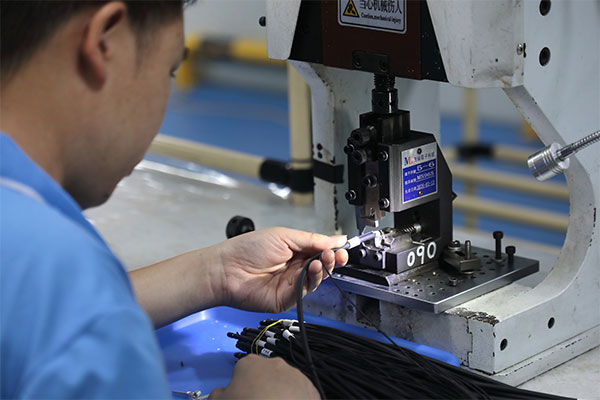
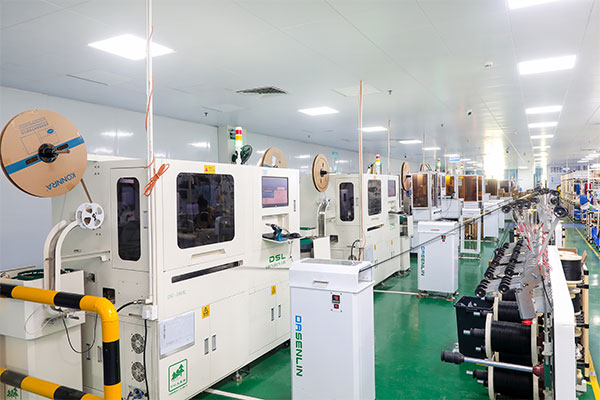
New Port Successfully Passes IATF16949 Re-certification Audit
News2025/09/16
The complex electronic and electrical architecture and in-vehicle Ethernet architecture of the new Porter intelligent vehicle.
Description of the Complex Electronic and Electrical Architecture and In-Vehicle Ethernet Architecture of the NewPort Intelligent Vehicle
In the wave of transformation of the modern automotive industry towards intelligence and electrification, the highly integrated electronic and electrical architecture and advanced in-vehicle Ethernet architecture of the NewPort Intelligent Vehicle have become the core pillars for its technological breakthroughs and market competitive advantages. This system is not only the information nerve center of the entire vehicle, but also the technological cornerstone for realizing autonomous driving, intelligent cockpit, efficient energy management, and continuous remote upgrade functions.
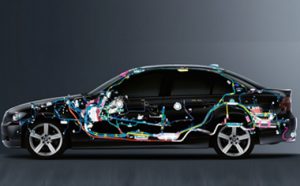
Its electronic and electrical architecture has evolved from a traditional distributed modular structure to a centralized “domain controller architecture,” and is developing towards a more advanced “central computing platform + regional controller” form. This architecture divides the vehicle’s functions into several core domains, such as the autonomous driving domain, intelligent cockpit domain, body control domain, powertrain domain, and chassis domain. Each domain is dominated by a powerful high-performance domain controller. By integrating dozens or even hundreds of previously scattered ECUs, it significantly reduces wiring harness length and complexity, lowers vehicle weight and manufacturing costs, and greatly improves data transmission efficiency and the flexibility of over-the-air (OTA) upgrades.
The “blood vessels” and “nerves” supporting the operation of this complex architecture are the in-vehicle Ethernet. Compared to traditional automotive networks such as CAN, LIN, and FlexRay, automotive Ethernet, with its high bandwidth, low latency, high reliability, and excellent scalability, has become the backbone network for inter-domain communication. In Newport’s intelligent vehicles, gigabit and even 10-gigabit automotive Ethernet provides a bottleneck-free transmission channel for massive amounts of data generated from sensors such as LiDAR, millimeter-wave radar, and high-definition cameras, ensuring the real-time performance and safety of high-level autonomous driving decisions. Simultaneously, it provides a smooth experience for multi-screen interaction, high-definition entertainment, and streaming media services within the intelligent cockpit.
Automotive Ethernet architecture typically employs a star or hybrid topology. The central gateway or core switch acts as a “traffic hub,” responsible for high-speed routing, protocol conversion, and network management of cross-domain data. Combined with time-sensitive networking technology, it ensures that critical control commands and audio/video streams are transmitted without jitter within a defined time window, meeting the stringent requirements of functional safety and high-quality service.
Furthermore, Newport’s architecture deeply integrates network security and functional safety mechanisms. From hardware isolation and secure boot to communication encryption and intrusion detection defense, a multi-layered defense-in-depth system is constructed to protect vehicles from cyberattacks. In terms of the power system, high/low voltage distribution networks and signal networks are meticulously planned and isolated to optimize electromagnetic compatibility and ensure stable and reliable operation of all systems even in complex electrical environments.
In summary, the new Porter intelligent vehicle, with its forward-looking centralized electronic and electrical architecture using in-vehicle Ethernet as the high-speed backbone, not only solves the current challenges of data deluge and computing power bottlenecks faced by intelligent vehicles, but also reserves ample performance and expansion space for the continued evolution of higher levels of autonomous driving, vehicle-to-everything (V2X) communication, and software-defined vehicles. This signifies that it has built core competitiveness for the next automotive era.

Copyright © 2025 NPT Group.All rights reserved